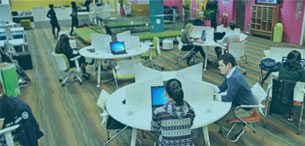
You will benefit from a combination of academic and clinical studies. The programme is evidence-based and research-led. The extensive hands-on clinical experience throughout is supported by experienced medical imaging technologists in radiology departments. The programme offers practical experience in simulation labs, hospitals and outpatient radiology facilities. So you will be well prepared to apply your learning in the clinical workplace.
Study with us towards a rewarding and patient-centred career as a Medical Imaging Technologist.
Medical Imaging Technologists (MITs) can work in a variety of roles either in public hospitals or private radiology practices. Most will begin their career in general radiographic imaging (x-ray) with opportunities to also work in computed tomography (CT), angiography and mammography.
MITs may subsequently choose to pursue additional studies to practise in specialisations such as magnetic resonance imaging (MRI), ultrasound and nuclear medicine.
Postgraduate study is available for MITs who wish to broaden their knowledge of medical imaging.
Further to that, postgraduate qualifications are required for professional registration purposes in the imaging technology subspecialties of MRI, ultrasound and nuclear medicine.
Those interested in advanced study or research can continue on to masters and PhD level qualifications in Medical Imaging.
The Bachelor of Medical Imaging (Honours) is a four-year qualification (480 points).
You will initially need to complete the first year of a BSc in Biomedical Science, taking prescribed courses in Biology, Chemistry and Physics, as well as a General Education course. Graduate entrants may be directed to include some or all of the Part I courses depending on their background. In subsequent years (Parts II–IV) you will complete courses in radiographic positioning and image acquisition, the physical principles and technology of medical imaging, image optimisation and evaluation, patient care and safety, sectional imaging anatomy and pathology, professional and evidence-based practice, and specialised imaging.
You will also gain clinical experience in simulation labs, hospitals and outpatient radiology facilities, and produce a final-year dissertation that develops your analytical and research skills in Medical Imaging.
♦1- One Photocopy of the Data Page of your Passport.
♦2- Official Transcripts.
♦3- Certification of the Senior high school.
♦4- Language Proficiency Certificate (if have any Language Certificate).
♦5- One Photocopy of Physical Examination.
♦6- Study/Research Plan (Not Less than 800 Words).
♦7- Two Recommendation Letters from Professors.
♦8- Certificate of Non-Criminal Record.
♦9- Financial Certification (5000USD or Above).
 5 4 3 2 1
MBBS ( Clinical Medicine in English )
9
¥ 14000

Murta
Murtadha
wewwwwww
WhatsApp/Phone
12121212121212
Skype
wewwwww


Murta
Murtad
Murtadha
WhatsApp/Phone
+964-7722228581
Skype
murtaza.alalili


sas
sas
1212
WhatsApp/Phone
12121212121212
Skype
qqwq


tt
tt
hiiii
WhatsApp/Phone
12121212122
Skype
sdssd.sds


test
test
sdfasdf
WhatsApp/Phone
sdafdasf
Skype
sadfsaf


aaaaa
aaaaaaaaaa
swswew
WhatsApp/Phone
asana
Skype
asas